
How to Store and Preserve Your Garden Harvest
There is a particular kind of gardening heartbreak that has nothing to do with pests or blight. It is opening the fridge in late summer, finding the courgettes (zucchini) you were so proud of gone soft at the ends, and quietly putting them in the compost.
Growing food is only half the skill. Keeping it is the other half — and it is the half almost nobody teaches. This guide covers how to store each type of produce properly, and what to do when you simply have too much.
First: harvest at the right moment
Storage life is largely decided before the crop ever reaches your kitchen.
Where each crop actually wants to live
Most kitchen food waste comes from putting the right vegetable in the wrong place. Three broad zones:
Cool and humid — 0–4°C (32–40°F), fridge crisper
Carrots, beets (beetroot), radishes, turnips, celery, broccoli, cabbage, cauliflower, peas, beans, salad leaves, spinach, chard, most herbs. Twist the tops off root vegetables first — leaves keep drawing moisture out of the root and turn carrots limp within days.
Cool and dry — 7–15°C (45–60°F), a cellar, garage, or unheated cupboard
Onions, garlic, shallots, winter squash, pumpkins, potatoes. Potatoes need darkness as well; light turns them green and bitter. Never refrigerate potatoes — cold converts their starch to sugar and ruins the texture.
Room temperature — on the counter
Tomatoes, basil, cucumbers, peppers, aubergines (eggplant), melons. Tomatoes lose flavour permanently below about 12°C (54°F). A tomato in the fridge is a tomato you have already spoiled — leave them stem-side down on a plate, out of direct sun.
Keep apples away from everything else. Apples, pears, melons and tomatoes emit ethylene gas, which ripens — and then rots — nearby produce. Store them apart from leafy greens, carrots and potatoes.
Simple techniques that buy you weeks
Curing builds a protective skin. Winter squash, pumpkins, onions, garlic and potatoes all store dramatically longer if cured first. Lay them in a single layer somewhere warm, dry and airy for 7–14 days (onions and garlic until the necks are papery; squash at 24–29°C / 75–85°F for about 10 days). A cured butternut keeps for six months. An uncured one keeps for weeks.
Damp sand or sawdust keeps carrots, beets and parsnips crisp for months. Layer them in a box of just-damp sand, not touching each other, in a cool dark place.
A jar of water rescues limp celery, carrot sticks and asparagus. Stand cut ends in water in the fridge.
The herb bouquet. Treat parsley, cilantro (coriander) and mint like cut flowers — stems in a glass of water, loose bag over the top, in the fridge. Two weeks instead of three days. Basil is the exception: keep it on the counter, never the fridge.
A damp towel in the bag with your salad leaves absorbs excess moisture and stops the slimy-edge problem. Wash and dry greens thoroughly first — a salad spinner genuinely pays for itself here.
Preserving the glut
When storage isn't enough, preserve.
Freezing is the fastest and most forgiving. Blanch most vegetables first — 2–3 minutes in boiling water, then straight into ice water — to deactivate the enzymes that cause off-flavours and mushy texture. Beans, peas, broccoli, carrots and sweetcorn all freeze superbly. Freeze in a single layer on a tray, then bag once solid, so you can pour out a handful at a time. Peppers, onions and herbs need no blanching at all.
Drying suits herbs, chillies, tomatoes and beans. Hang herbs in small bunches somewhere warm, dark and airy, or use the lowest oven setting with the door ajar. Fully dry means brittle, not bendy — any remaining moisture will cause mould in the jar.
Quick pickling takes fifteen minutes and no special equipment: pack cucumbers, beans, carrots or radishes into a clean jar, cover with hot vinegar-and-brine, cool, refrigerate. Ready in two days, good for a month or two in the fridge.
Fermenting is even simpler — cabbage, cucumbers and beans need only salt, water and time — and it adds nutrients rather than removing them.
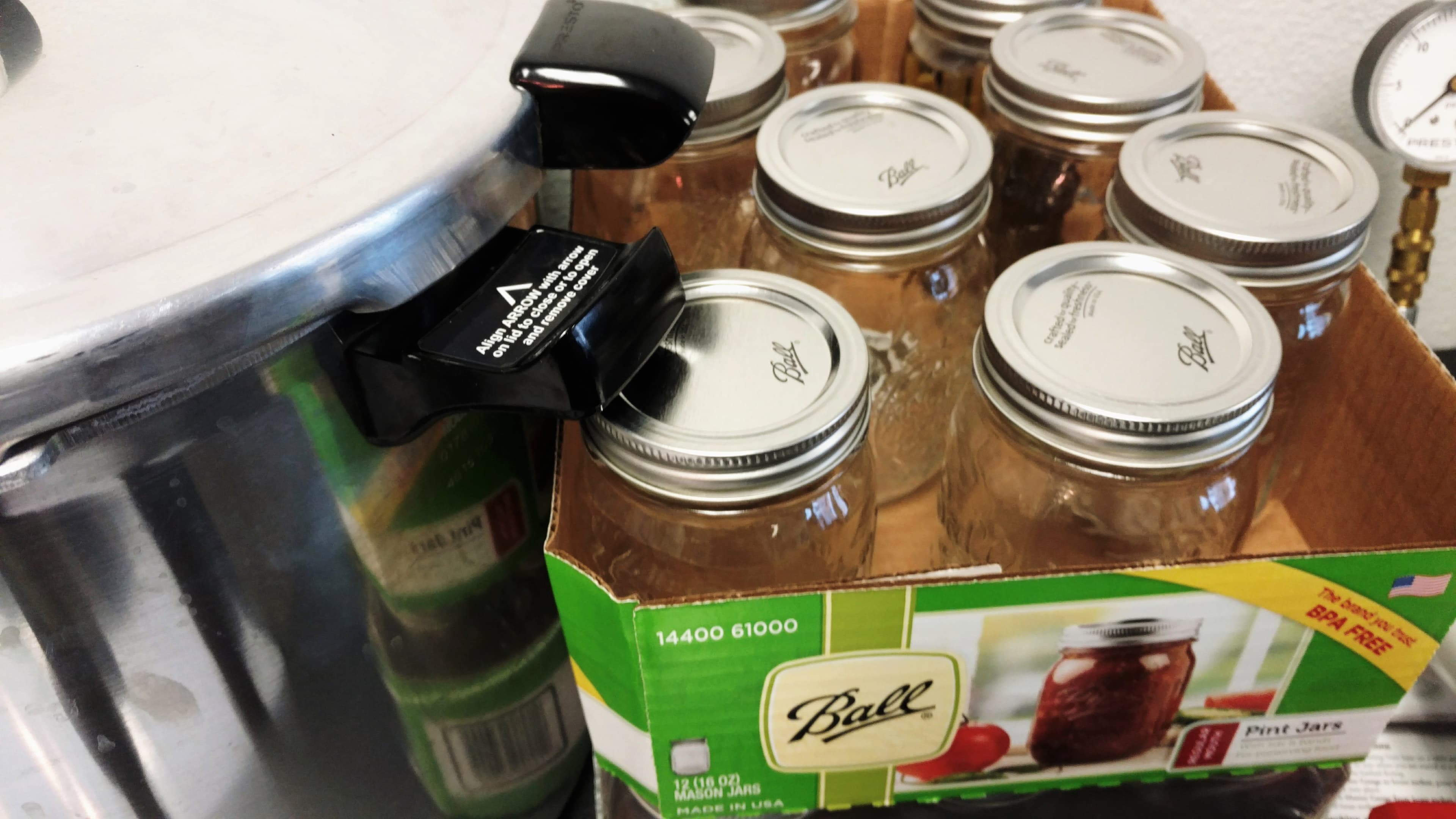
Water-bath and pressure canning give genuine shelf stability, but they are the one method where technique matters for safety, not just quality. High-acid foods (tomatoes with added acid, pickles, jams) go in a water-bath canner; low-acid foods (plain beans, corn, carrots) must be pressure canned. Follow a tested, current recipe from a food-safety authority in your country — never an improvised one, and never a recipe scaled up or down by guesswork.
Just cook it. Roasted tomato sauce, courgette (zucchini) fritters, pesto, soup — all freeze beautifully and skip the preserving equipment entirely. Pesto frozen in an ice-cube tray is a genuine midwinter luxury.
The best preservation method is a neighbour
Here is the honest truth about a garden glut: no amount of freezing, drying and pickling absorbs a courgette plant in full production. You will run out of freezer before the plant runs out of enthusiasm.
Fresh produce eaten this week is worth more than the same produce frozen, forgotten, and thrown out in February. Sharing is not what you do when preserving fails — it is the highest-value use of a surplus, and it costs nothing but a message.
That's the whole idea behind Locavori. List what you have too much of, see what's growing on your street, and swap. Your excess beans for someone's plums. Your fifteenth cucumber for a jar of their chutney. Nothing wasted, and a neighbourhood that knows each other by name.
Grow well, store well, and share the rest.
Got more than you can eat? Join Locavori free and swap your surplus with growers nearby.
Related Posts
How to Harvest and Store Fresh Herbs
Cutting your herbs the right way means bushier plants and bigger harvests — and a little preserving now means homegrown flavour all winter. Here's how to harvest, dry, and freeze your herbs.
How to Prune Tomatoes for a Bigger Harvest
A few minutes of pruning each week channels your tomato plant's energy into bigger, earlier, healthier fruit. Here's exactly how and when to do it.
How to Reduce Food Waste with a Home Garden
Growing your own food is one of the most powerful ways to cut household food waste. Here's how a kitchen garden helps you waste less and eat better.