
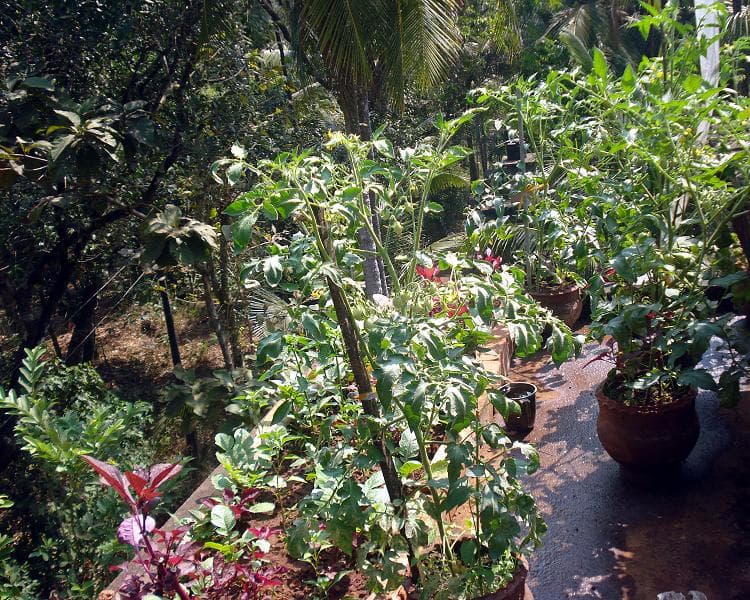
How to Prune Tomatoes for a Bigger Harvest
Few summer chores reward you faster than a few minutes spent pruning your tomato plants. A vine that's been thoughtfully trimmed channels its energy into ripening fruit instead of growing a jungle of leaves — and the payoff is bigger, earlier, healthier harvests. Whether you're tending a single patio pot or a long row in the back yard, here's everything you need to know to prune tomatoes with confidence.
Why prune tomatoes at all?
Left to their own devices, tomato plants will happily sprawl in every direction, sending out side shoots that each try to become a full plant. That's a lot of leaves competing for the same sunlight and the same supply of water and nutrients. Pruning helps in four practical ways:
First, know your tomato type
Before you snip anything, find out whether your variety is determinate or indeterminate — it changes everything.
If your seed packet or plant label is long gone, watch the plant: a bush that stays compact and sets fruit all at once is determinate; one that keeps climbing is indeterminate.
The star of the show: pinching suckers
A sucker is the small shoot that appears in the "armpit" — the 45-degree angle where a leaf branch meets the main stem. Left alone, each sucker becomes a whole new stem with its own leaves, flowers, and fruit, which sounds great until you realise the plant can't ripen them all well.
To remove a sucker on an indeterminate plant:
1. Find it when it's small — 5–8 cm (2–3 in) long. 2. Pinch it between thumb and forefinger and snap it sideways. Small suckers come away cleanly with no tool needed. 3. For thicker suckers, use clean, sharp scissors or secateurs to avoid tearing the stem.
Do this once a week and the job stays tiny. Many growers train indeterminate plants to a single main stem, or to two stems by letting the sucker just below the first flower cluster grow on. Two stems give you more fruit on a sturdier plant — a good middle path for home gardens.
Pruning the lower leaves
Once your plant is established and fruit has set, remove the leaves on the bottom 15–30 cm (6–12 in) of the stem. These lower leaves are the oldest, get the least light, and sit closest to the soil — which is exactly where soil-borne diseases splash up during watering or rain. Stripping them creates a clean gap that keeps your plant healthier all season.
Topping off at the end of the season
About four to five weeks before your first expected autumn frost, cut off the growing tip of each main stem (this is called "topping"). The plant stops making new flowers that will never have time to ripen and instead pours everything into the green fruit already on the vine. Check your local average first-frost date — it varies enormously, from late August in cool climates to never in frost-free zones. Gardeners in USDA zones 9–11 or warm Southern Hemisphere regions may skip this step entirely.
A few golden rules
Pruning by the calendar
Because tomato season lands in different months around the world, think in terms of plant stage rather than dates:
The reward
Stick with a weekly five-minute routine and you'll notice the difference within a couple of weeks: tidier plants, fruit that colours up faster, and far fewer disease problems. Pruning isn't about cutting your plant back — it's about telling it exactly where to put its energy.
Growing more tomatoes than you can eat? That's the best problem in gardening. Locavori helps you swap your surplus with neighbours, discover what others nearby are growing, and turn a glut into a community. Join Locavori free and share your harvest.
Related Posts
How to Store and Preserve Your Garden Harvest
Growing food is only half the skill — keeping it is the other half. Where each crop actually wants to be stored, plus freezing, drying and pickling a glut.
Common Tomato Problems and How to Fix Them
Black patches, split skins, yellow leaves, flowers that never set fruit — the eight tomato problems every grower meets, and what actually fixes each one.
How to Grow Fennel: From Seed to Harvest
Feathery, aromatic, and surprisingly easy, fennel gives you a herb, a vegetable, and a pollinator magnet in one plant. Here's how to grow it and get fat, sweet bulbs.