
Common Tomato Problems and How to Fix Them
You did everything right. You started the seeds, hardened them off, staked and pruned and watered. And now, right at peak season, something is wrong: the fruit has a black patch, the skins are splitting, the leaves are yellowing, or the plant is flowering beautifully and setting nothing at all.
Almost every tomato problem has a specific, fixable cause. Here are the eight you are most likely to meet, with what actually works for each.
1. Black, sunken patches on the bottom of the fruit
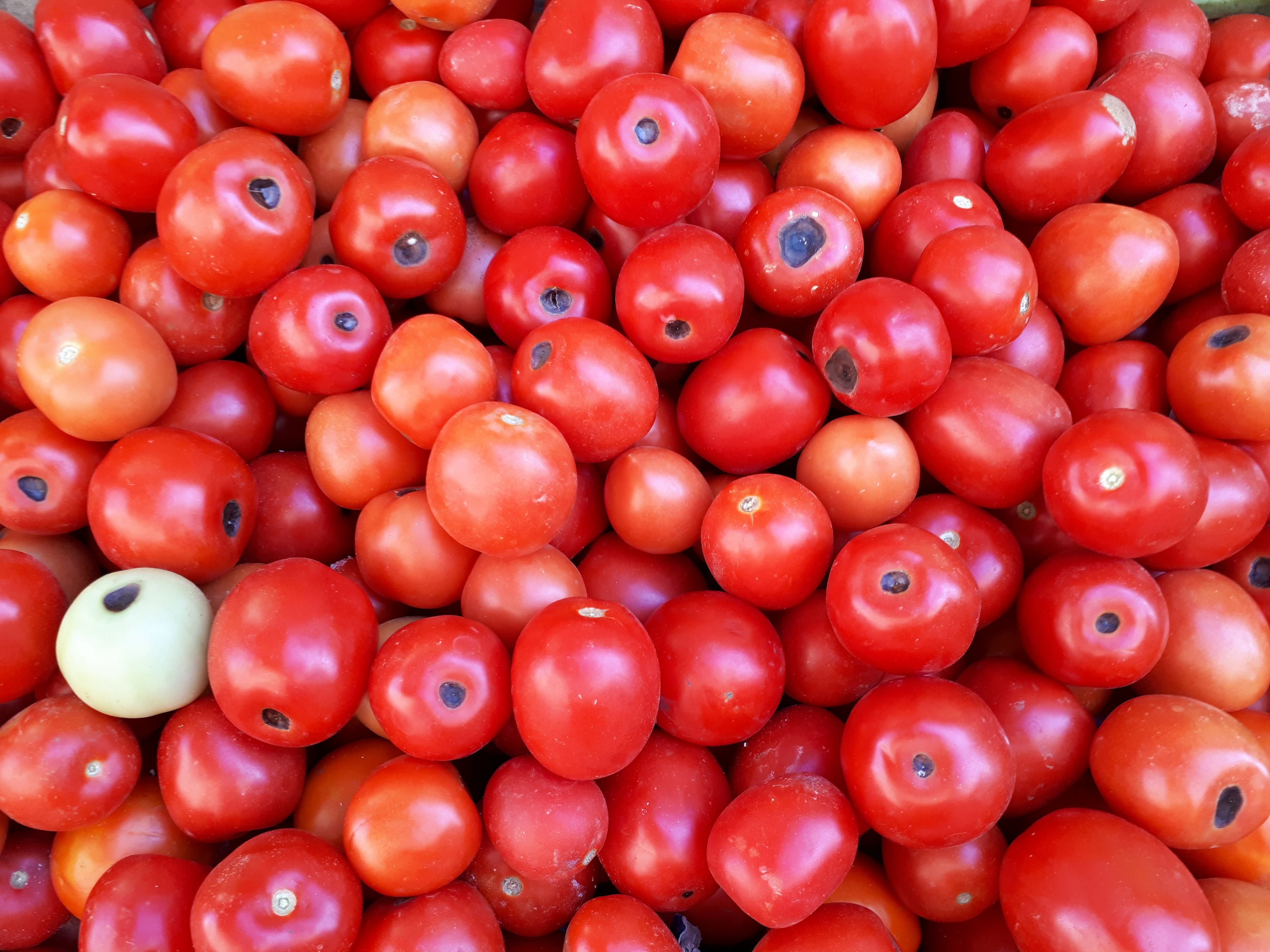
Blossom end rot. It looks like a disease, but it isn't — no fungus, no bacteria, and it will not spread from plant to plant.
It's a calcium delivery failure. There is almost certainly enough calcium in your soil; the plant just cannot move it to the fast-growing fruit, and the tissue at the blossom end collapses. The usual trigger is inconsistent watering — a dry spell followed by a soaking.
Fix it: water deeply and regularly rather than a little every day. Mulch with 5–8 cm (2–3 in) of straw or compost to buffer soil moisture. Container tomatoes are especially prone because pots dry so fast — in hot weather they may need water twice a day. Avoid high-nitrogen feeds, which push leafy growth that outcompetes fruit for calcium.
Don't bother with the calcium sprays sold for this; foliar calcium barely reaches the fruit. Consistent water is the answer. Affected fruit won't recover — pick it off, and the fruit that sets afterwards will usually be fine. The rest of the tomato is safe to eat if you cut the damaged end away.
2. Split and cracked skins
The plant took up water faster than the skin could stretch — classic after heavy rain following a dry spell, or after ripe fruit sits through a downpour.
Fix it: the same steady watering and mulching. Harvest ripe fruit promptly, especially when rain is forecast, and finish ripening it indoors. Cherry tomatoes and thin-skinned heirlooms crack most readily; that's genetics, not your fault. Cracked fruit is fine to eat straight away but won't store, so use it first.
3. Lots of flowers, no fruit
Blossom drop. Tomatoes are fussy pollinators. Flowers abort when nights stay above about 21°C (70°F) or drop below 13°C (55°F), when days exceed roughly 32°C (90°F), or when humidity is very high or very low.
Fix it: mostly, wait. Fruit set usually resumes when the weather moderates. You can help by tapping or gently shaking the flower trusses every day or two around midday to shake pollen loose — tomatoes are self-fertile and just need vibration. Shade cloth during a heat wave helps. Again, ease off the nitrogen: an overfed plant makes leaves instead of fruit.
4. Lower leaves turning yellow
If it's the oldest, lowest leaves gradually yellowing while the plant grows on happily above, this is normal ageing. Remove them — it improves airflow and reduces disease.
If yellowing is widespread and fast, suspect nitrogen shortage (uniform pale yellow, oldest leaves first) or overwatering in poorly drained soil, which suffocates roots. Check that pots actually drain and that you're not watering on a schedule rather than by need.
5. Yellow leaves with dark brown spots, spreading upward
Early blight (or septoria leaf spot). A fungal disease, splashed up from the soil onto low leaves, then climbing the plant.
Fix it: remove affected leaves immediately and bin them — do not compost. Mulch to stop soil splashing onto foliage. Water at the base only. Strip the lowest 30 cm (12 in) of leaves so nothing touches the ground. Space plants generously and prune for airflow. Rotate: don't plant tomatoes, potatoes, peppers or eggplant/aubergine in that spot for three years.
6. Greasy brown-black patches, rapid collapse
Late blight — the serious one. It moves fast in cool, wet weather: large greasy-looking dark patches on leaves and stems, white fuzz on leaf undersides in humid conditions, and firm brown lesions on the fruit. A plant can go from healthy to dead in under a week.
There's no organic cure. Remove and destroy infected plants promptly to protect your neighbours' gardens as well as your own. Next season, plant blight-resistant varieties, space widely, and grow under cover if you can.
7. Curling leaves
Usually not a disease. Leaves rolling upward and inward is a normal stress response to heat, drought or heavy pruning, and the plant will fruit fine. If curling comes with distorted, strappy new growth, suspect herbicide drift — from a neighbour's lawn treatment, or from straw or manure carrying persistent herbicide residue.
8. Holes in fruit and leaves stripped overnight
Tomato hornworm — a large green caterpillar, brilliantly camouflaged. Look for dark pellets of frass on leaves and work upward from there. Hand-picking at dusk is genuinely the most effective control. If you find one covered in what look like white rice grains, leave it: those are parasitic wasp cocoons, and that wasp is your ally.
The underlying pattern
Look back at the fixes and the same three things keep appearing: water consistently, mulch, and don't overfeed with nitrogen. Get those right and you avoid most of this list before it starts.
And bear in mind that a few damaged tomatoes out of a heavy crop is not failure — it's normal. Even excellent growers lose some fruit every year.
---
Ended up with more tomatoes than you can possibly eat? Most of us do, all at once. Locavori connects you with neighbours nearby to share your glut, swap for produce you didn't grow, and pass on the troubleshooting knowledge you earned the hard way.
Related Posts
How to Get Rid of Powdery Mildew: Organic Prevention and Treatment
That white dust on your squash and cucumber leaves is powdery mildew — the most common fungal disease in home gardens. Here's how to prevent it, treat it organically, and know when to just let it go.
How to Get Rid of Aphids Naturally
Aphids are the home garden's most common pest — but you can control them without synthetic chemicals. Here are the organic methods that actually work.
How to Prune Tomatoes for a Bigger Harvest
A few minutes of pruning each week channels your tomato plant's energy into bigger, earlier, healthier fruit. Here's exactly how and when to do it.