
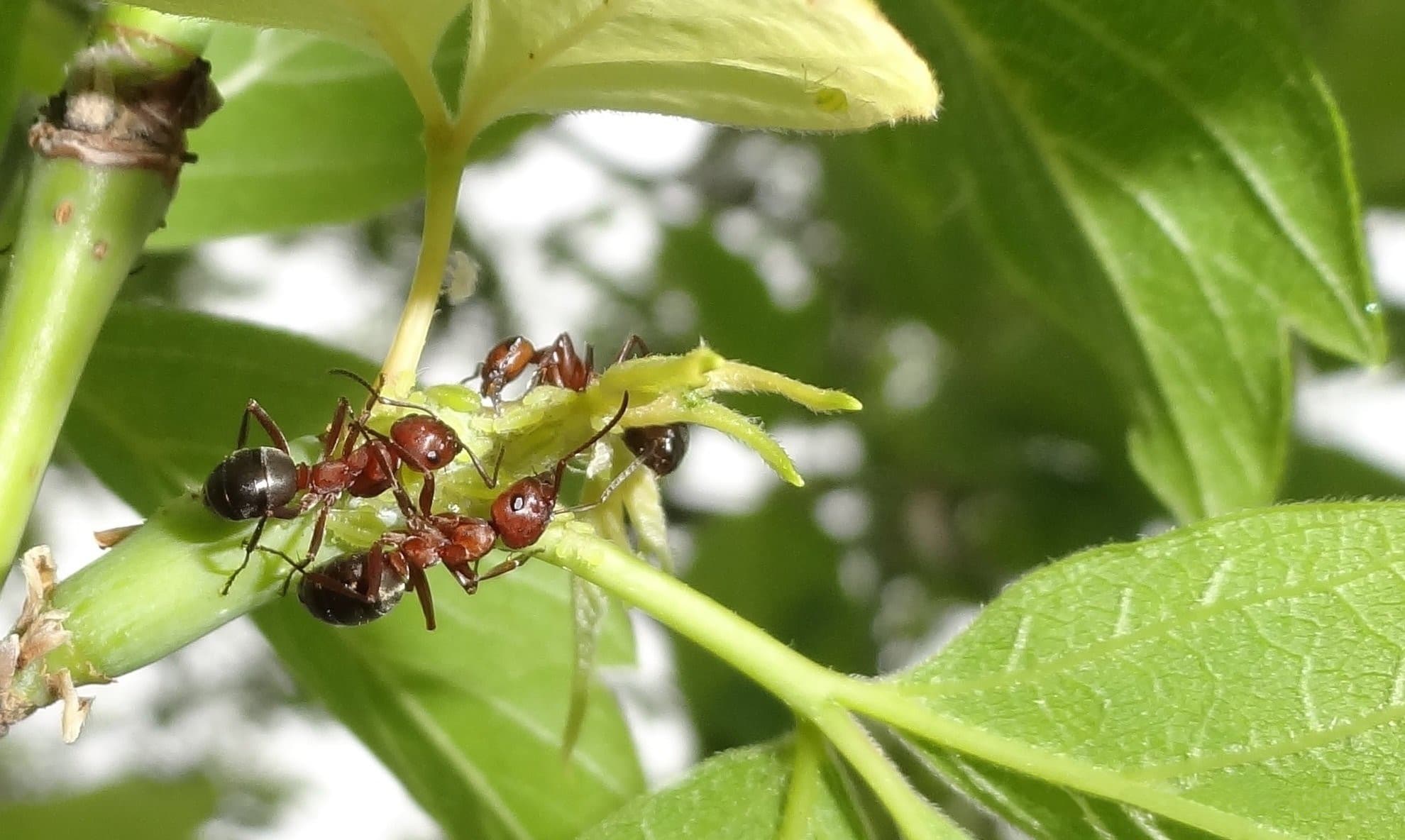
How to Get Rid of Aphids Naturally
You head out to admire your beans or roses on a warm morning and there they are: clusters of tiny, soft-bodied insects packed along the tender new growth, with leaves curling and a sticky shine on everything below. Aphids. They're the most common pest in the home garden worldwide — and the good news is you can deal with them effectively without reaching for a single synthetic chemical.
What aphids actually do
Aphids are sap-suckers. They pierce soft plant tissue and drink the sugary sap, which weakens the plant, distorts new leaves, and stunts growth. As they feed they excrete a sticky residue called honeydew, which coats leaves and often grows a black, sooty mould. They can also spread plant viruses from one plant to the next. A few aphids are harmless; the problem is that they reproduce astonishingly fast — a single female can produce dozens of live young without even mating, so a small colony becomes an infestation in days.
They come in many colours — green, black, grey, pink, even white and fuzzy — but the signs are always the same: clusters on new shoots and the undersides of leaves, curling foliage, sticky honeydew, and ants marching up and down the stems.
Why the ants matter
If you see ants tending your aphids, they're not the cause but they are part of the problem. Ants "farm" aphids for their honeydew and will actively protect them from predators. Dealing with the ants — a band of horticultural glue around a stem, or simply disrupting their trails — makes every other control method work better.
Organic controls, from gentlest to strongest
1. Blast them off with water
The simplest fix and often all you need. Use a firm jet of water from a hose or spray bottle to knock aphids off, paying special attention to the undersides of leaves. Aphids are soft and slow; once dislodged, most never make it back. Repeat every couple of days until the population crashes.2. Squash and prune
For a small, contained outbreak, wipe colonies off by hand (wear a glove if squeamish) or snip off the worst-affected shoot tips and bin them. On a sturdy plant this is fast and immediate.3. Insecticidal soap or a homemade spray
A soap spray breaks down the aphids' soft outer coating and dehydrates them. Buy insecticidal soap, or make your own: mix 1 teaspoon of pure liquid soap (not detergent) into 1 litre (about 1 quart) of water. Spray directly onto the aphids, coating the undersides of leaves, in the cool of early morning or evening — never in hot sun, which can scorch foliage. Test on a few leaves first, as some plants are sensitive. Reapply every few days.4. Neem oil
Neem is a plant-derived oil that disrupts aphid feeding and reproduction. Mix according to the label, add a drop of soap to help it stick, and spray thoroughly. Like soap, apply it out of direct sun and avoid spraying open flowers where bees are active.The long game: let nature do the work
The most sustainable aphid control isn't a spray at all — it's a garden that hosts the predators who eat aphids for a living.
You attract these allies by planting flowers they love — alyssum, dill, fennel, cilantro/coriander, yarrow, and marigolds — and by not spraying broad-spectrum insecticides that kill the good bugs along with the bad. A garden in balance rarely sees a serious aphid problem because the predators arrive before the aphids get out of hand.
Prevention beats treatment
When to relax
Remember that the goal is balance, not sterility. A handful of aphids feeds the ladybirds and lacewings that keep your whole garden healthy. Reach for the hose or the soap spray when colonies are spreading and plants are visibly suffering — and otherwise let your garden's natural predators earn their keep.
Growing food the organic way is even better when it's shared. Locavori connects you with neighbours growing nearby, so you can swap surplus produce, trade tips on pests and seasons, and build a more resilient local food network. Join Locavori free and grow together.
Related Posts
Common Tomato Problems and How to Fix Them
Black patches, split skins, yellow leaves, flowers that never set fruit — the eight tomato problems every grower meets, and what actually fixes each one.
How to Get Rid of Powdery Mildew: Organic Prevention and Treatment
That white dust on your squash and cucumber leaves is powdery mildew — the most common fungal disease in home gardens. Here's how to prevent it, treat it organically, and know when to just let it go.
How to Grow Fennel: From Seed to Harvest
Feathery, aromatic, and surprisingly easy, fennel gives you a herb, a vegetable, and a pollinator magnet in one plant. Here's how to grow it and get fat, sweet bulbs.