
How to Get Rid of Powdery Mildew: Organic Prevention and Treatment
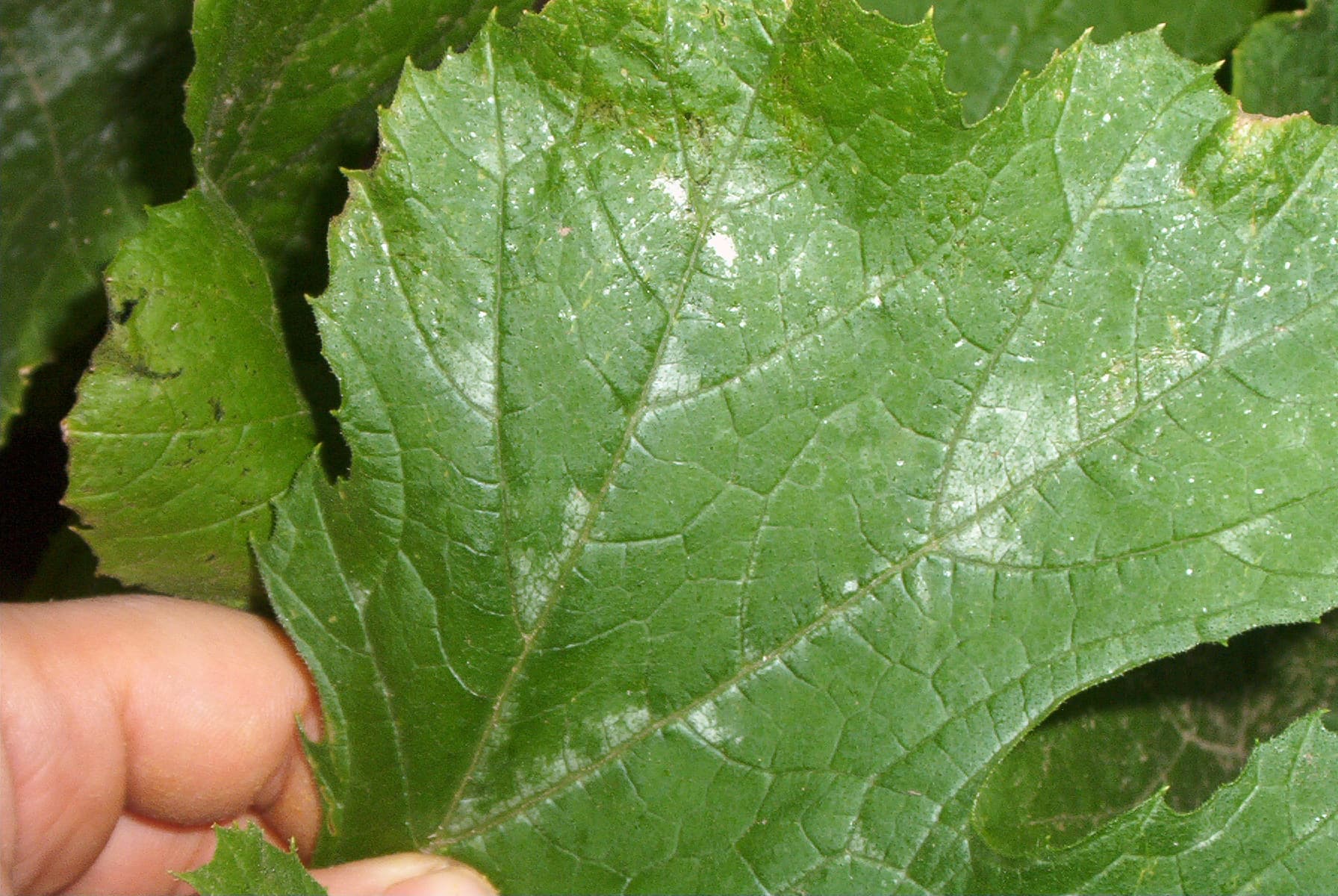
Every gardener meets it eventually. You walk out one warm morning in late summer, and the big healthy leaves on your squash, cucumbers or zucchini/courgettes look like someone dusted them with flour. That white bloom is powdery mildew, and it is the single most common fungal disease in home vegetable gardens worldwide.
The good news: it is rarely fatal, it is very manageable, and you almost never need a harsh chemical to deal with it. Here is everything you need to know.
What powdery mildew actually is
Powdery mildew is not one organism but a whole family of closely related fungi. The species that attacks your squash is different from the one on your grapes, roses or apples — which is why mildew on your zucchini/courgette will not jump to your strawberry patch.
It shows up as white or grey powdery patches, usually on the upper surface of older, shaded leaves first. Left alone, the patches merge, the leaf yellows, then browns and dies. Photosynthesis drops, and so do your yields and fruit sweetness.
Unlike most fungal problems, powdery mildew does not need wet leaves to get started. It thrives in warm days of 20–27°C (68–80°F), cool nights, high humidity in the air, and poor airflow — exactly the conditions of late summer. That is why it so often appears just as your plants hit peak production.
Most susceptible: squash, pumpkins, zucchini/courgette, cucumbers, melons, peas, beans, and among ornamentals, roses, phlox and bee balm.
How to prevent it (this is where the real win is)
Prevention beats treatment every time with this disease. Five things matter most:
1. Space plants properly. Crowding is the number one cause. Give squash and pumpkins 90–120 cm (3–4 ft) between plants, cucumbers 30–45 cm (12–18 in) on a trellis. Air moving through a canopy dries leaf surfaces and disrupts spore germination.
2. Choose resistant varieties. Seed catalogues list this — look for "PM" or "PMR" (powdery mildew resistant) in the variety description. Resistant zucchini/courgette and cucumber varieties are widely available now and make an enormous difference for very little effort.
3. Water the soil, not the leaves. Use a watering can at the base, a soaker hose, or drip irrigation. If you must overhead water, do it in the morning so leaves dry within a couple of hours.
4. Plant in full sun. Mildew fungi favour shade. Six or more hours of direct sun a day suppresses them considerably.
5. Don't over-fertilise with nitrogen. Lush, soft, fast-grown foliage is far more susceptible than sturdy growth. Feed in moderation and lean on compost rather than high-nitrogen liquid feeds.
Organic treatments that genuinely work
If it has already arrived, act early — the first few spots are much easier to stop than a fully coated plant.
Remove affected leaves first. Snip off the worst leaves and bin them or bury them deep in a hot compost pile. Never leave them lying on the soil. On a big squash plant, removing 20–30% of the oldest leaves is fine and improves airflow at the same time.
Potassium bicarbonate spray — the most effective home option. Mix 1 tablespoon potassium bicarbonate (baking soda's more effective cousin, sold as a garden fungicide) plus half a teaspoon of liquid soap into 4 litres (1 US gallon) of water. Spray all leaf surfaces. It raises surface pH and collapses the fungal cells on contact. Repeat weekly.
Baking soda spray — the pantry alternative. Same recipe with sodium bicarbonate. It works, though less well than potassium bicarbonate, and repeated use can build up sodium in the soil, so rotate it with other methods.
Milk spray — surprisingly well supported by trials. Mix one part milk to two or three parts water and spray in bright sunlight; the proteins produce compounds that are antifungal in sunlight. Apply weekly. Best as a preventative on plants you know are prone.
Neem oil — both a treatment and a preventative, and it handles aphids and mites at the same time. Follow label rates, and never spray in full midday sun or above about 32°C (90°F) or you risk scorching leaves.
Whatever you use: test on a couple of leaves first, spray in early morning or evening, and cover the undersides of leaves too. Reapply after rain.
What not to bother with
Vinegar sprays burn foliage more reliably than they kill fungus. Cinnamon, garlic and chamomile teas have very weak evidence behind them. And you cannot "wipe off" mildew — the fungus has rooted structures inside the leaf tissue, so wiping just spreads spores.
End of season matters
Powdery mildew overwinters on plant debris and on perennial hosts. At the end of the season, clear out all infected material — do not till it in. If your compost pile does not get properly hot, keep mildewed leaves out of it entirely. Then rotate: don't put cucurbits in the same bed next year.
Living with it
Here is the reassuring part. If powdery mildew shows up on your squash in the last few weeks of the harvest, the honest answer is often to do nothing. The plant will still ripen the fruit it is carrying. A little mildew on old leaves in the tail end of the season is a normal part of a productive garden, not a failure.
Fruit from a mildewed plant is completely safe to eat. Wash it as usual and enjoy it.
The gardeners who suffer least are not the ones with the best spray cabinet — they are the ones who gave their plants room, sun and sensible watering back in spring.
---
Growing more than you can eat, mildew and all? That is exactly what Locavori is for. Share your surplus zucchini/courgettes, cucumbers and squash with neighbours nearby, swap for what you did not grow, and trade the hard-won advice that only comes from a season in the dirt.
Related Posts
Common Tomato Problems and How to Fix Them
Black patches, split skins, yellow leaves, flowers that never set fruit — the eight tomato problems every grower meets, and what actually fixes each one.
How to Get Rid of Aphids Naturally
Aphids are the home garden's most common pest — but you can control them without synthetic chemicals. Here are the organic methods that actually work.
How to Attract Pollinators to Your Garden
Bees, butterflies, and hoverflies make your vegetables more productive. Here's how to attract pollinators to your garden with the right flowers, shelter, and habits.