
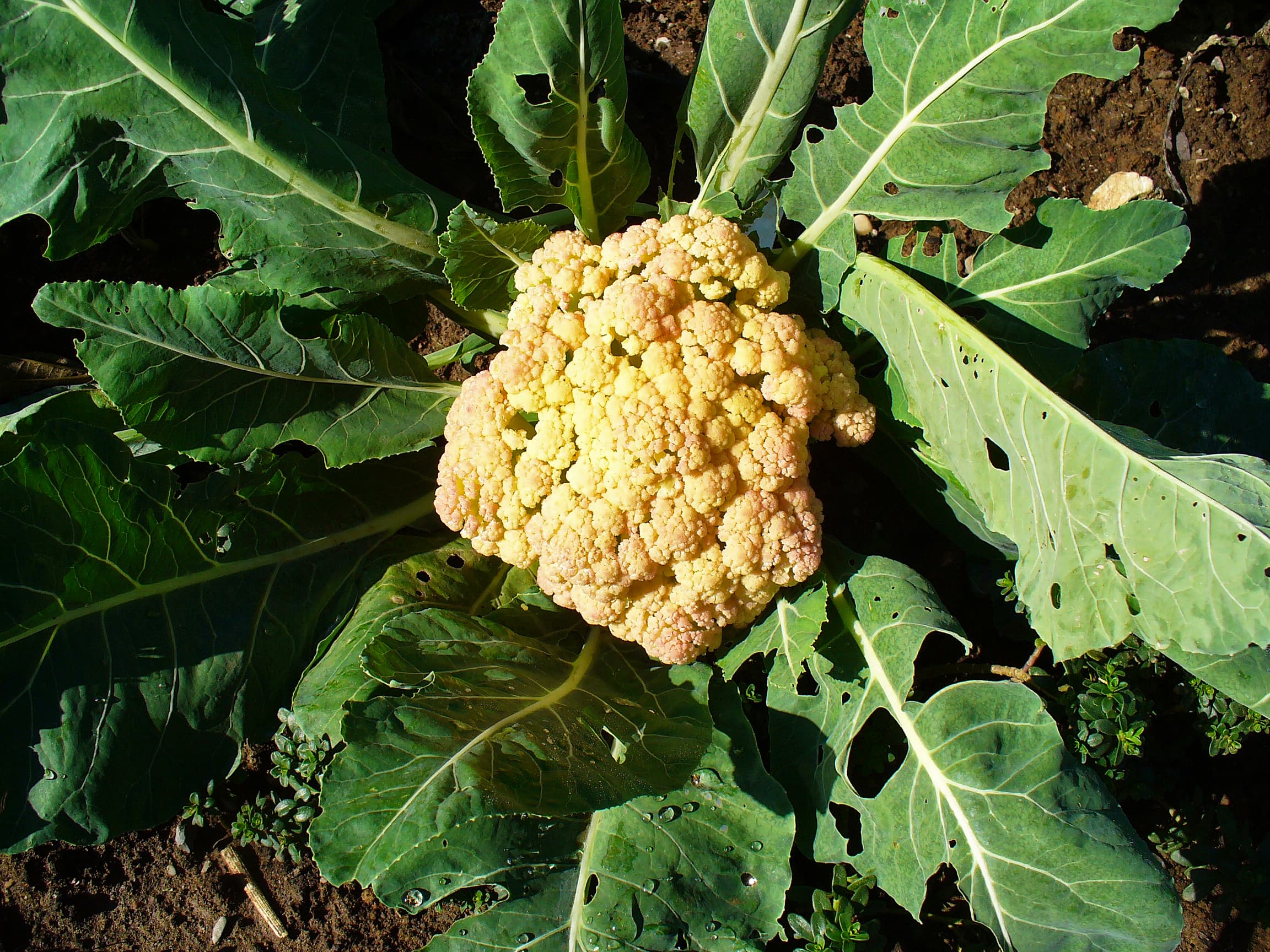
How to Grow Cauliflower: Complete Guide
Cauliflower has a reputation as the diva of the vegetable garden — and there's some truth to it. Get the timing and conditions right, though, and you'll harvest dense, creamy-white heads that taste worlds better than anything wrapped in plastic at the store. This guide walks you through every step, from sowing to cutting that perfect curd.
Understanding cauliflower's one big demand
Almost everything about growing cauliflower comes down to a single principle: it wants to grow steadily, without check, in cool conditions. Any stress — a transplant shock, a dry spell, a heatwave, a sudden cold snap — can cause the plant to "button," forming a tiny, premature head instead of a full one. Once you understand that cauliflower hates interruptions, the rest of the advice falls into place.
This makes cauliflower a cool-season crop. In most climates it's grown for a spring harvest (sown late winter to early spring) or, often more successfully, an autumn/fall harvest (sown in summer to mature in the cooler weeks ahead). Hot midsummer is its enemy.
Choosing a variety
Cauliflower comes in more than just white:
If you're new to the crop, a coloured or Romanesco type sown for an autumn harvest is the most beginner-friendly route.
Sowing seed
Start seed in modules or small pots rather than scattering it, so you can transplant with minimal root disturbance. Sow about 1.5 cm (½ in) deep. Cauliflower germinates best at around 18–21°C (65–70°F).
Keep seedlings in good light so they don't stretch, and water consistently. They're ready to plant out when they have four to six true leaves, usually 5–6 weeks after sowing.
Preparing the bed and transplanting
Cauliflower is a hungry brassica that loves firm, fertile, moisture-retentive soil with a near-neutral pH (around 6.5–7.0). Dig in plenty of well-rotted compost or manure ahead of planting, then firm the soil well — brassicas dislike loose ground.
When transplanting:
Harden off indoor-raised plants over a week before they go out, so the move outdoors isn't a shock.
Watering and feeding
This is where most cauliflowers are won or lost. The plants need a steady, generous supply of water — aim for the equivalent of 2–3 cm (about an inch) a week, more in hot weather. Erratic watering is the classic cause of small or "ricey" heads. A mulch around the plants helps lock in moisture and keep roots cool.
Feed with a balanced fertiliser or a nitrogen-rich top-dressing a few weeks after planting to fuel leafy growth, which in turn supports a big head. Healthy outer leaves are the engine that builds the curd.
Blanching white varieties
Pure-white cauliflower heads can yellow and coarsen if exposed to strong sun. To keep them creamy and tender, blanch them: once a head is the size of an egg, snap or fold a few of the plant's own large outer leaves over the top and tuck or tie them loosely in place. Check underneath every few days as harvest nears. Coloured and Romanesco types don't need this — they actually colour up better in sunlight.
Dealing with common problems
Brassicas attract a predictable cast of pests, all manageable:
Netting from day one solves most of these at once.
Harvesting
Cut cauliflower while the curd is still firm, tight, and smooth — don't wait for it to get large if the florets are beginning to separate or "rice." A head can go from perfect to past-it in just a few days in warm weather, so check daily as it matures. Slice through the stem with a knife, keeping a few outer leaves to protect the head.
Cauliflower doesn't store long fresh, but it freezes well in florets — and a glut is the perfect excuse to share heads with neighbours.
The satisfaction of a perfect head
There's real pride in cutting a flawless, homegrown cauliflower — proof you gave the plant the steady, unhurried conditions it asked for. Start with an autumn-harvest sowing, keep the water consistent, and you'll wonder why anyone calls this crop difficult.
Want to share your harvest and trade surplus produce with growers nearby? Join Locavori today and become part of your local food-sharing community.
Related Posts
How to Grow Sage: Complete Guide
Sage is a tough, drought-tolerant perennial herb that gives years of harvests. Learn how to plant, grow, harvest, and prune sage in gardens or containers.
How to Grow Fennel: From Seed to Harvest
Feathery, aromatic, and surprisingly easy, fennel gives you a herb, a vegetable, and a pollinator magnet in one plant. Here's how to grow it and get fat, sweet bulbs.
How to Grow Celery: From Seed to Harvest
Crisp, flavourful homegrown celery is easier than its fussy reputation suggests. Here's how to grow tender stalks from seed to harvest.