
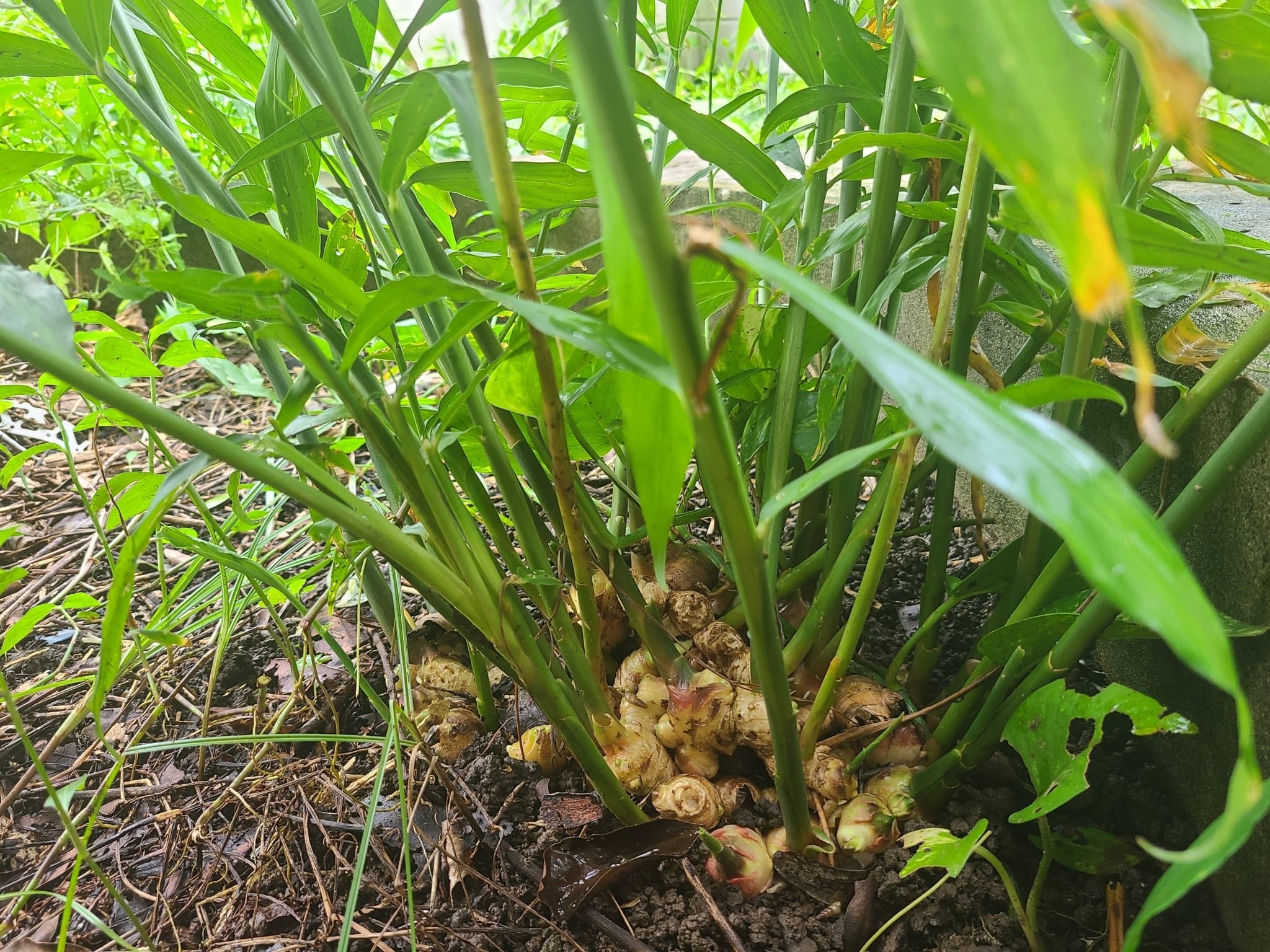
How to Grow Ginger at Home
Fresh ginger is one of those kitchen staples that seems exotic but is genuinely easy to grow at home — even far outside the tropics. All you need is a piece of ginger root, a pot, and a warm corner. Because it grows from a rhizome rather than seed, you can start your first plant with a knob of ginger from the grocery store. Here's how to turn that into a thriving plant and a homegrown harvest.
What is ginger, and where does it grow?
Ginger (*Zingiber officinale*) is a tropical perennial grown for its aromatic underground rhizomes — the knobbly "root" you cook with. In its native climate it grows year-round, but in cooler regions it's treated as a warm-season crop or grown indoors in containers. That makes it one of the few spices almost anyone can grow, whether you're in a frost-free zone or a cold apartment with a sunny windowsill.
Ginger needs warmth (ideally 20–30°C / 68–86°F), humidity, and a long growing season — typically 8 to 10 months from planting to a mature harvest. The good news: a container moves indoors when nights turn cold, so even short-summer climates can succeed.
Choosing your "seed" ginger
Start with a plump, firm rhizome with smooth, taut skin and several visible growth buds — the small bumps or "eyes," much like a potato. Bigger pieces with multiple eyes give you the strongest start.
Optional head start: to encourage sprouting, set the rhizome in a warm spot for a week or two until you see green nubs forming, then plant.
Planting ginger step by step
1. Cut and cure. Break or cut the rhizome into pieces about 4–5 cm (1.5–2 in) long, each with at least one or two eyes. Let the cut surfaces dry for a day or two so they callus over — this reduces rot. 2. Choose a wide pot. Ginger grows sideways, not down, so a shallow, wide container at least 30 cm (12 in) across and 30 cm (12 in) deep is ideal. Make sure it has drainage holes. 3. Use rich, free-draining mix. Combine quality potting mix with plenty of compost. Ginger likes moisture but rots in waterlogged soil. 4. Plant shallow. Lay each piece flat with the eyes pointing up, and cover with 2.5–5 cm (1–2 in) of soil. 5. Water and warm. Water lightly and place the pot somewhere warm. Sprouts can take 2 to 6 weeks to appear, so be patient — warmth speeds things up.
Outdoors in frost-free regions, plant directly in a sheltered, partly shaded bed enriched with compost after all danger of frost has passed.
Caring for your ginger
Common problems
Harvesting ginger
You have two options:
Save a few plump pieces with healthy eyes to replant, and you'll never need to buy seed ginger again. Store the rest in the fridge, or freeze or dry it for long-term use.
Grow it, use it, share it
A single pot of ginger can yield far more than one kitchen needs — which makes it a perfect crop to share. Pass a sprouting piece to a neighbour so they can start their own, swap fresh rhizomes for someone's homegrown garlic or chillies, or split a harvest across your street. Growing even one unexpected crop like ginger is a great reminder of how much food we can produce in small spaces, together.
Want to swap homegrown produce and growing tips with people near you? Join Locavori free and become part of a neighbourhood that grows and shares.
Related Posts
How to Grow Mushrooms at Home: A Beginner's Guide
Mushrooms need no sunlight, no garden and barely any space. Here's how to grow oyster mushrooms indoors in under a month — and what to do with the glut.
How to Grow Fennel: From Seed to Harvest
Feathery, aromatic, and surprisingly easy, fennel gives you a herb, a vegetable, and a pollinator magnet in one plant. Here's how to grow it and get fat, sweet bulbs.
How to Grow Oregano: A Complete Guide
Oregano is a hardy, drought-tolerant perennial that thrives on neglect and comes back year after year. Here's how to grow, harvest, and dry it for the fullest flavour.