
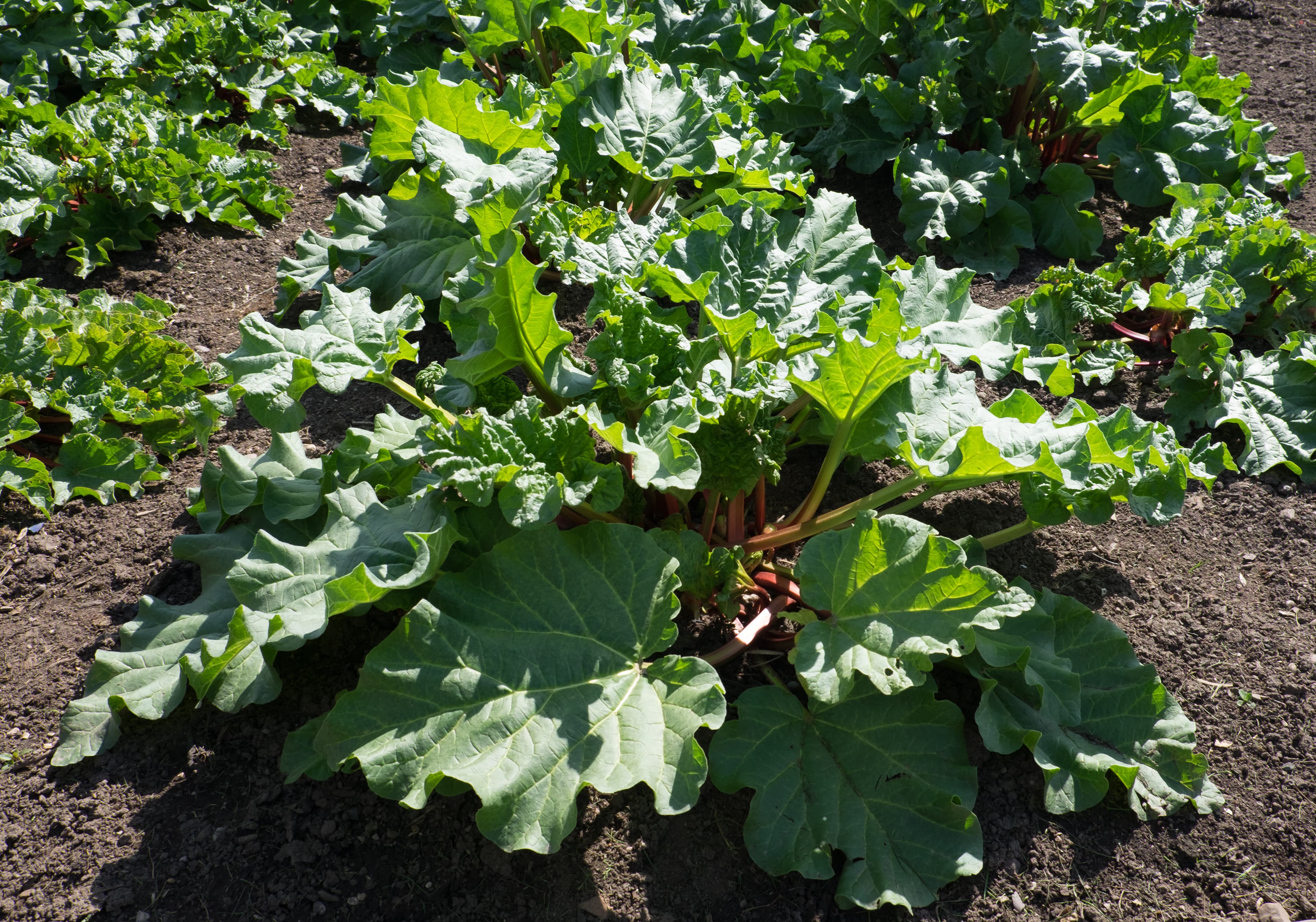
How to Grow Rhubarb: A Complete Guide
If you want a crop that gives back year after year with almost no effort, rhubarb is hard to beat. Plant it once and a healthy crown can keep producing tart, ruby-pink stalks for a decade or more. It's one of the first harvests of the year, arriving when little else is ready, and it asks for very little in return. For anyone who likes the idea of a low-maintenance, perennial food plant, rhubarb is the perfect place to start.
What exactly is rhubarb?
Rhubarb is a hardy perennial grown for its thick, fleshy leaf stalks (petioles), which are tart and used like a fruit in pies, crumbles, jams, and compotes. Important safety note: only the stalks are edible — the leaves contain high levels of oxalic acid and are toxic, so always cut them off and compost them.
A single established plant produces generously, which makes rhubarb a classic crop to share with neighbours — there's almost always more than one household can use.
Choosing a variety
Popular, reliable varieties include 'Victoria' (a dependable all-rounder), 'Timperley Early' (great for early forcing), 'Champagne' (sweet and deeply coloured), and 'Canada Red'. Redder varieties look striking but green-stalked types are often just as tasty — colour doesn't determine ripeness.
Sun, soil, and site
Rhubarb is wonderfully tough but does best with:
Rhubarb genuinely needs cold. Most varieties require a period of winter chill below about 4°C (40°F) to break dormancy and crop well, which is why it thrives in cool-temperate regions and struggles in hot, frost-free climates. If you garden somewhere very warm, look for low-chill varieties or grow it as a cool-season annual.
Planting
The easiest way to start is from a crown (a dormant root division) planted in autumn/fall or early spring while dormant.
1. Dig a generous hole and work in plenty of compost. 2. Set the crown so the growing buds sit just at or slightly above soil level — burying them too deep encourages rot. 3. Space plants about 90 cm (3 ft) apart; they get big. 4. Water in well.
You can also grow rhubarb from seed, but it's slower and the results are more variable — crowns are the reliable choice.
The golden rule: don't harvest in year one
This is the single most important tip. In the first year after planting, resist harvesting any stalks. The plant needs that first full season to establish a strong root system. Pulling stalks too early weakens it for years to come. From the second year onward, you can harvest lightly, and by the third year, freely.
Watering and feeding
Forcing for early, tender stalks
For sweeter, paler, super-tender stalks weeks ahead of the main crop, you can force rhubarb in late winter. Cover an established crown with an upturned bucket or a traditional forcing pot to exclude light. The stalks grow long and pale reaching for the light. Only force well-established plants, and give a forced crown a year off afterwards to recover.
Harvesting the right way
Harvest from late spring into early summer. To pick, grasp a stalk near the base and pull and twist gently so it comes away cleanly — don't cut it, as the stump can rot. Take no more than about a third to a half of the stalks at any one time so the plant keeps powering on.
Stop harvesting by midsummer to let the plant build reserves for next year. As the season ends, any flower spikes that appear should be cut off — flowering diverts energy away from stalk production.
Common problems
Dividing and sharing
Every 5–6 years, lift and divide congested crowns in winter while dormant. Each section with at least one healthy bud becomes a brand-new plant — a perfect free gift to pass on to a neighbour or trade for someone else's surplus produce.
That generosity is exactly what homegrown food is about: one crown, planted once, feeding you and the people around you for years.
Want to swap surplus rhubarb, crowns, or crumbles with growers nearby? Join Locavori today and start sharing your harvest with your neighbourhood.
Related Posts
How to Grow Sage: Complete Guide
Sage is a tough, drought-tolerant perennial herb that gives years of harvests. Learn how to plant, grow, harvest, and prune sage in gardens or containers.
How to Grow Fennel: From Seed to Harvest
Feathery, aromatic, and surprisingly easy, fennel gives you a herb, a vegetable, and a pollinator magnet in one plant. Here's how to grow it and get fat, sweet bulbs.
How to Grow Oregano: A Complete Guide
Oregano is a hardy, drought-tolerant perennial that thrives on neglect and comes back year after year. Here's how to grow, harvest, and dry it for the fullest flavour.