
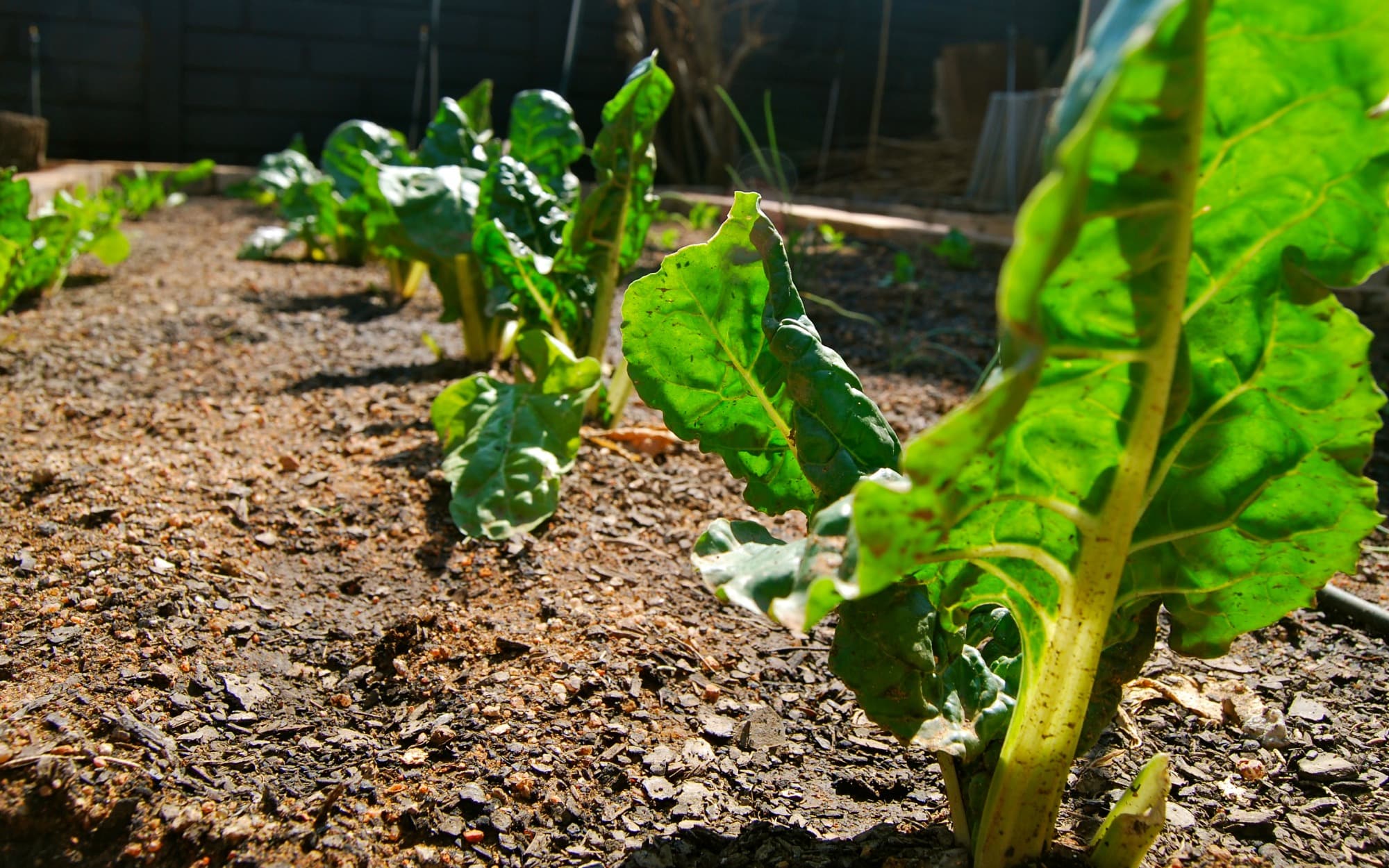
How to Grow Swiss Chard: Easy Greens All Season
If you're looking for a single vegetable that gives you spinach-like greens through summer heat, survives mild winters, dresses up a flowerbed with neon stems, and asks almost nothing of you in return — grow Swiss chard.
Chard is one of the most generous crops in the garden. A handful of plants can feed a family of four from late spring through autumn, and in mild climates straight into the following spring. Yet it's still underused, especially compared to its diva cousin spinach, which bolts at the first warm breeze.
This guide covers everything you need to grow chard well: choosing varieties, sowing, harvesting for months on end, and what to do with the gluts.
What Is Swiss Chard?
Swiss chard (*Beta vulgaris* subsp. *vulgaris*) is the same species as beetroot, bred for leaves and stems rather than roots. The leaves taste like a milder, sweeter spinach. The stems — white, golden, pink, ruby, or candy-striped — are crisp and slightly earthy when cooked. It's also known as silverbeet (Australia, New Zealand), perpetual spinach (close cousin), or simply chard.
Unlike spinach, chard tolerates heat. Unlike kale, it grows quickly and the leaves stay tender. Unlike lettuce, it doesn't mind a bit of rough handling. For new gardeners, it's almost foolproof.
Best Varieties
If you only have room for one, *Bright Lights* gives you colour and yield. If you want the closest taste to spinach, choose *Perpetual Spinach*.
When to Sow
Chard is forgiving about temperature. Seeds germinate at anything from 10–30°C (50–85°F), with the sweet spot around 18°C (65°F).
Always check your local last-frost date — that's the anchor for spring sowing.
How to Sow
Chard "seeds" are actually little clusters that contain 2–4 embryos, so expect several seedlings per planting hole.
Direct sow (easiest): 1. Loosen the soil to a depth of 25 cm (10 in). Chard has a fairly deep taproot. 2. Make drills 2 cm (¾ in) deep, 40 cm (15 in) apart. 3. Drop one seed cluster every 10 cm (4 in). 4. Cover, firm gently, water in. 5. Seedlings appear in 7–14 days.
Start indoors: Sow in modules 3–4 weeks before transplanting. Useful if slugs are heavy or your soil is slow to warm.
Thin to 25–30 cm (10–12 in) apart for full-size plants. The thinnings are excellent salad — don't bin them.
Spacing and Soil
Chard isn't fussy, but rewards effort:
The Harvest That Keeps Giving
This is chard's superpower. Never pull the plant up. Instead:
1. Wait until the outer leaves are 20–30 cm (8–12 in) tall. 2. Snap or cut individual outer leaves at the base, leaving the central crown of 4–6 young leaves untouched. 3. Harvest every 5–7 days. New leaves push up from the centre continuously.
A single plant produces leaves for 6–10 months under the right conditions. In zones 8+, it often overwinters and gives a second flush the following spring before finally bolting.
Watering and Care
Common Problems
Leaf miners — tiny grubs that tunnel inside leaves, leaving silvery trails. Crush affected leaves and discard them. Floating row cover prevents the adult flies from laying eggs.
Slugs and snails — love young chard. Beer traps, copper tape on containers, or wool pellets help. Hand-pick at dusk.
Yellowing leaves — usually nitrogen hunger after weeks of cutting. A liquid feed corrects it within a week.
Cercospora leaf spot — small grey-brown circles with purple edges. Remove affected leaves, water at soil level (not over leaves), and rotate next year.
How to Use the Glut
Once chard hits its stride, you'll have more than you can eat. Strategies:
Sharing the Harvest
Chard is a near-perfect crop for neighbourhood sharing. A few plants outproduce any single household, the leaves don't keep more than a couple of days in the fridge, and almost everyone enjoys a bunch of fresh greens. That's exactly what Locavori is built for — connecting growers with neighbours who'd love what you've got too much of.
Ready to share your surplus? Join Locavori free and find food-loving neighbours in your area.
Related Posts
How to Grow Mushrooms at Home: A Beginner's Guide
Mushrooms need no sunlight, no garden and barely any space. Here's how to grow oyster mushrooms indoors in under a month — and what to do with the glut.
How to Grow Fennel: From Seed to Harvest
Feathery, aromatic, and surprisingly easy, fennel gives you a herb, a vegetable, and a pollinator magnet in one plant. Here's how to grow it and get fat, sweet bulbs.
How to Grow Chives: Complete Guide
Chives are one of the easiest, most rewarding herbs to grow — a hardy perennial that returns every year. Here's how to grow them from seed to harvest in beds, pots, or on a windowsill.